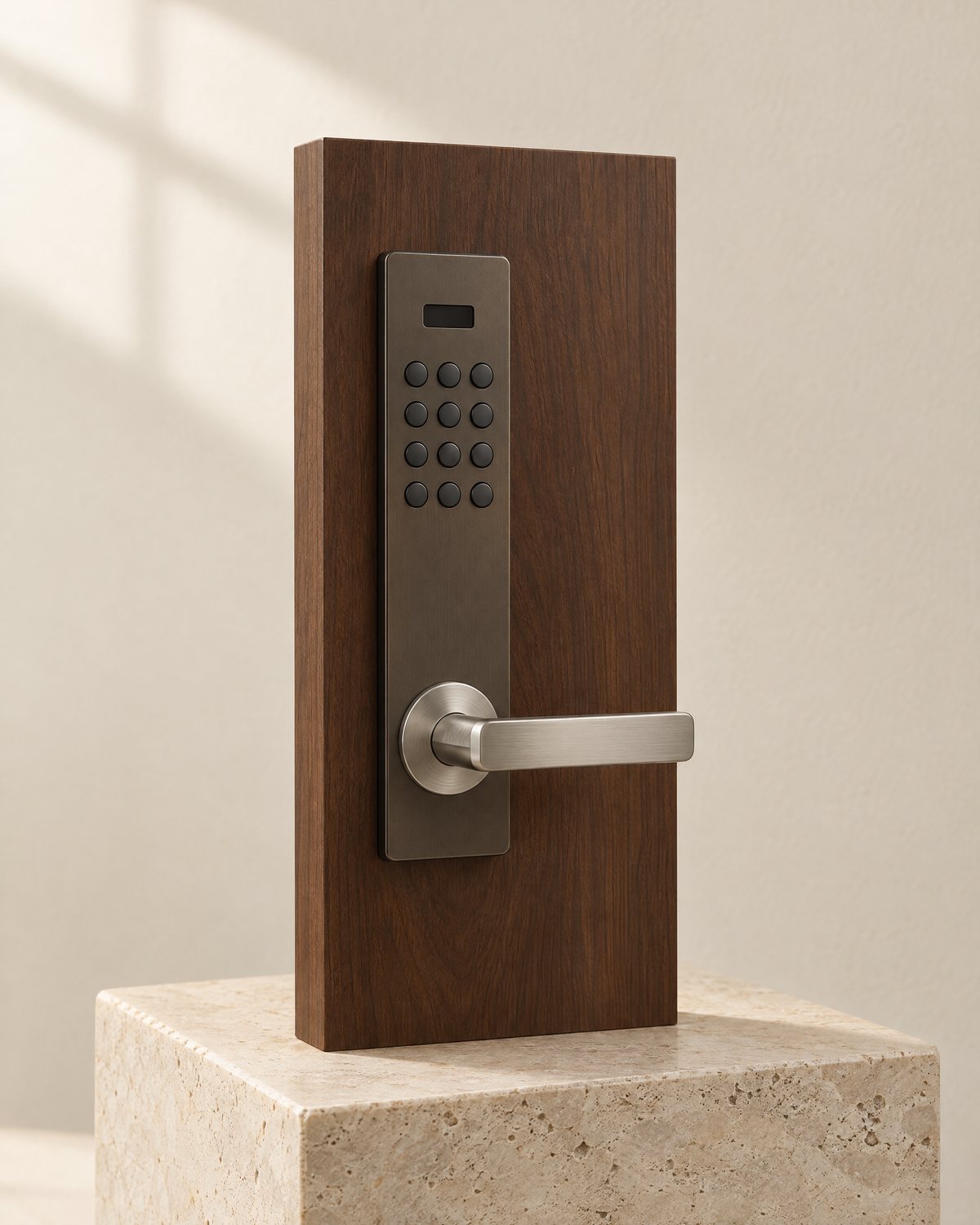
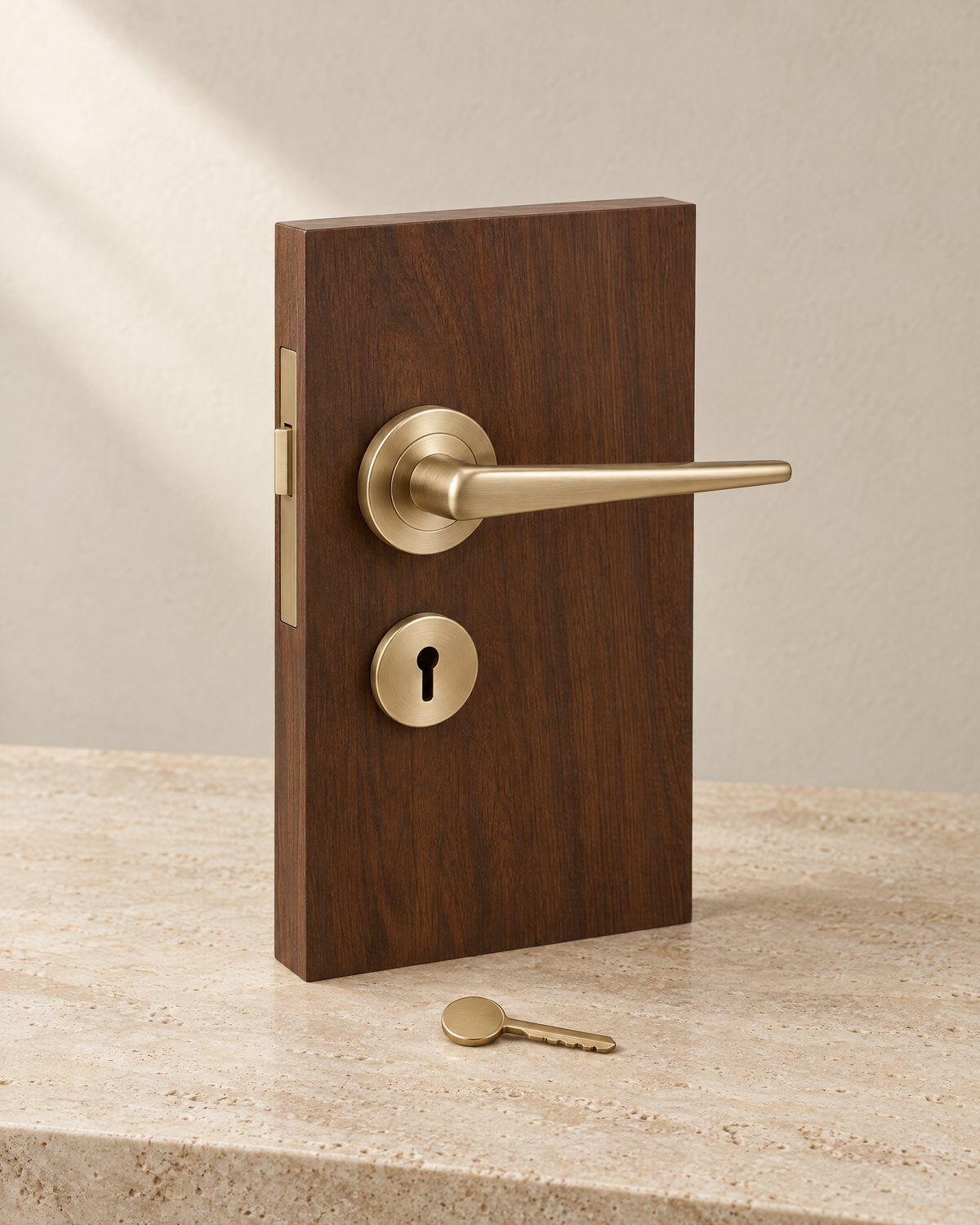
What a digital lock changes
A digital lock lets you open the door with a code, a card or another credential instead of, or as well as, a key. You can give access to someone without handing over a key, and often withdraw it again.
What it does not change
The door, the frame and the lock body still do the physical work. A digital front end on a weak door is still a weak door. Check that the lock body and strike are suited to a main door.
Power and overrides
- Digital locks run on batteries. Ask how the lock warns you when they are low.
- Ask what happens if the batteries are flat: many locks have an emergency power point or a mechanical key behind a cover.
- Keep the override key somewhere you can reach from outside.
Fit
Digital locks are made for particular door thicknesses and materials, and some need a specific lock body. Bring the door thickness, the material and a photo of both faces of the door around the existing lock.
When a mechanical lock is the better choice
- Doors that are rarely locked or used by few people.
- Places where batteries would be inconvenient to change.
- Interior doors, where a simple latch or privacy lock is enough.
Side by side
| Mechanical | Digital | |
|---|---|---|
| Opens with | Key or thumb-turn | Code, card, and usually a key override |
| Needs power | No | Yes, batteries |
| Sharing access | Copy keys | Add or remove codes or cards |
| Typical use | Any door | Main doors, offices |
General guidance only. Figures given as typical come from published manufacturer data and standards summaries; always check the specification of the item you buy.