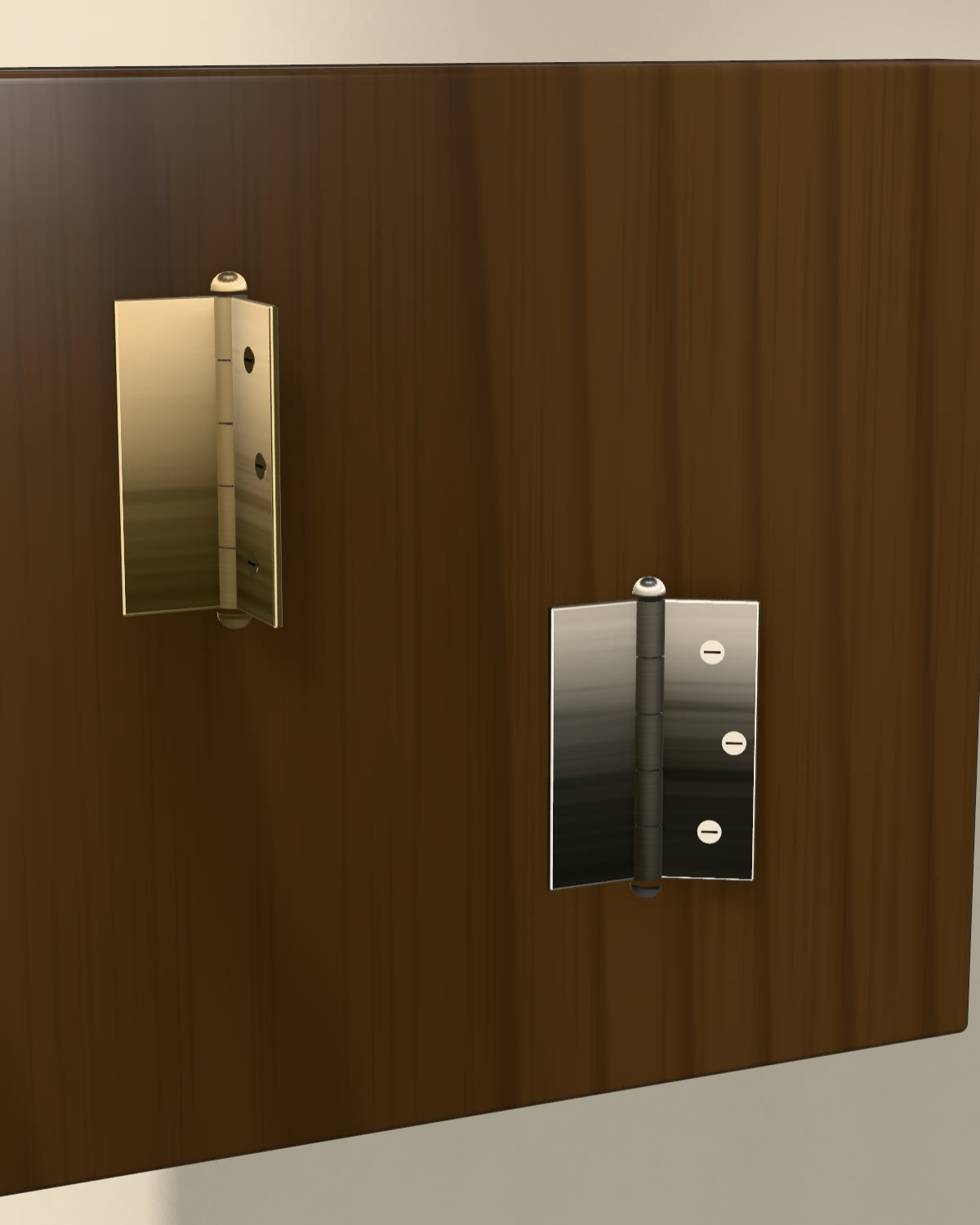
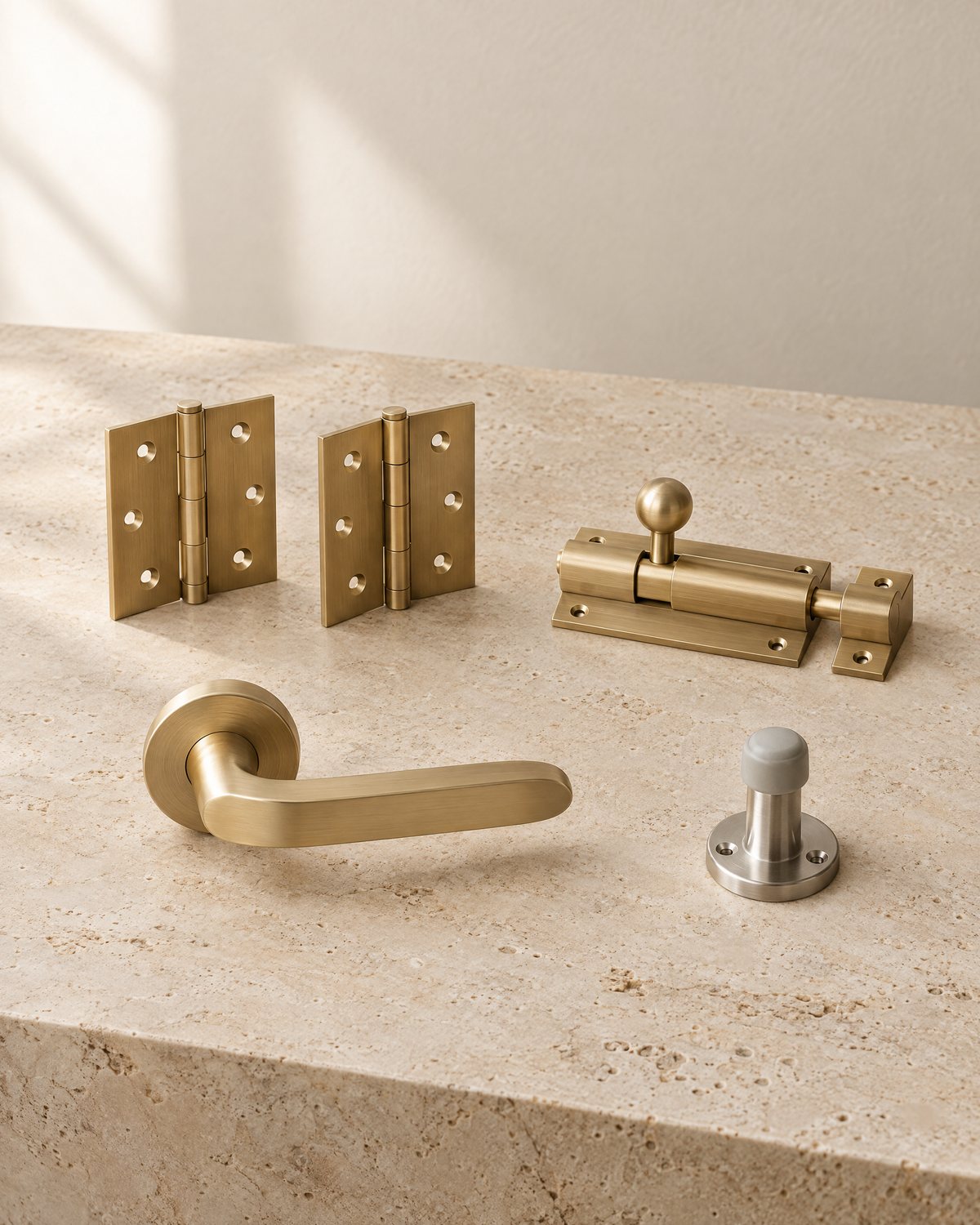
Types
- Butt hinges: the everyday choice, set into the door edge and frame.
- Ball-bearing hinges: smoother and longer-lasting on heavy or busy doors.
- Parliament hinges: wider leaves so the door clears a deep frame or moulding.
- Spring hinges: pull the door closed on lighter interior doors.
Size and number
Larger and thicker hinges carry more weight. A standard-height door commonly uses three hinges; tall or heavy doors often use four. If you are unsure, more support is the safer side to err on.
Fixing
Use screws long enough to reach solid timber in the frame, and fit hinges square in their recesses so the door hangs true.
Finish
Match hinge finish to the handles and lock on the same door. The finishes guide explains the common options.
Bring to the shop
Door height, thickness and approximate weight, plus the leaf size of any existing hinge.
General guidance only. Figures given as typical come from published manufacturer data and standards summaries; always check the specification of the item you buy.